Private Mind Mapping vs Shared Whiteboards
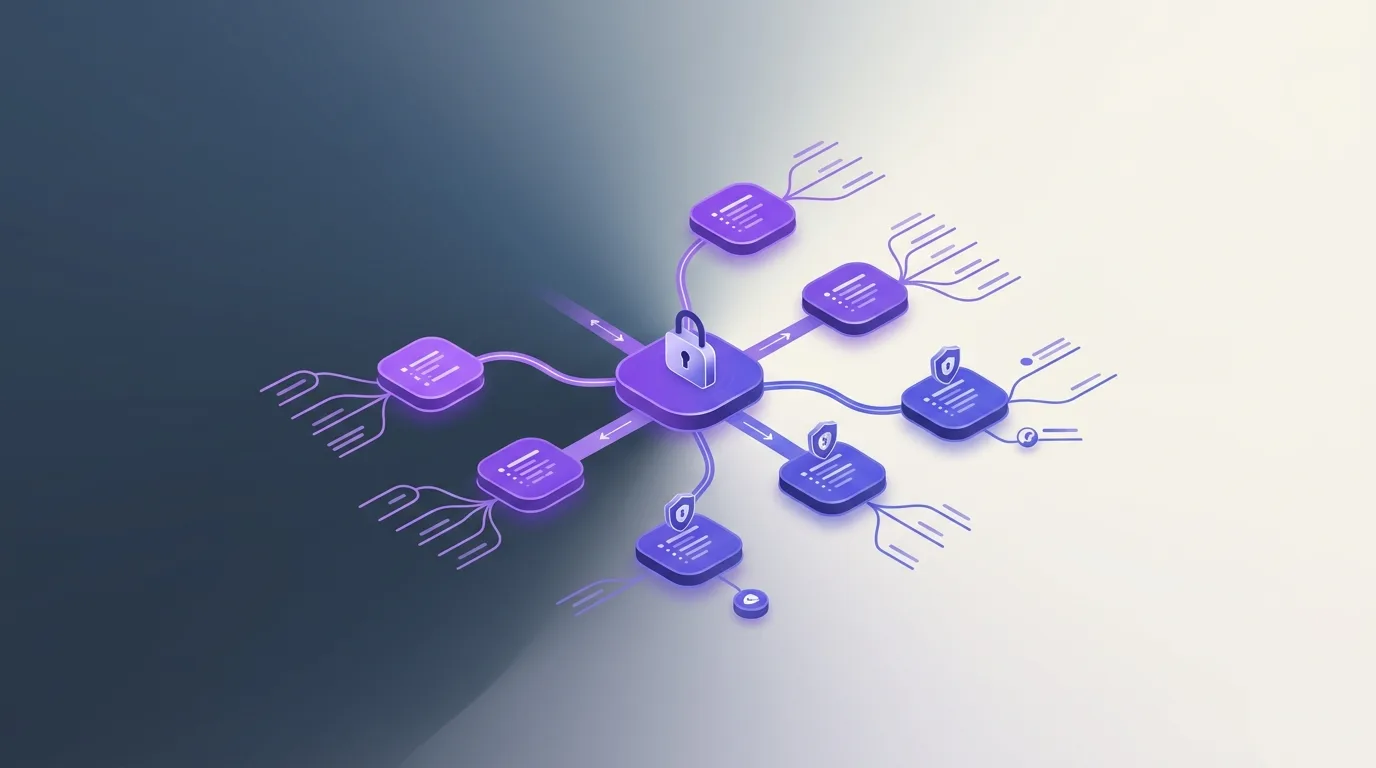
Shared whiteboards and private mind mapping tools can look similar at first glance. Both offer visual space, nodes, connections, and spatial thinking. In practice, though, they often serve different workflows and different trust assumptions.
What whiteboards are strong at
Whiteboards are ideal for open collaboration, facilitation, and fast group work. They are often designed around visibility, co-editing, and spontaneous teamwork. For many teams, that is exactly right.
What private mind maps are stronger at
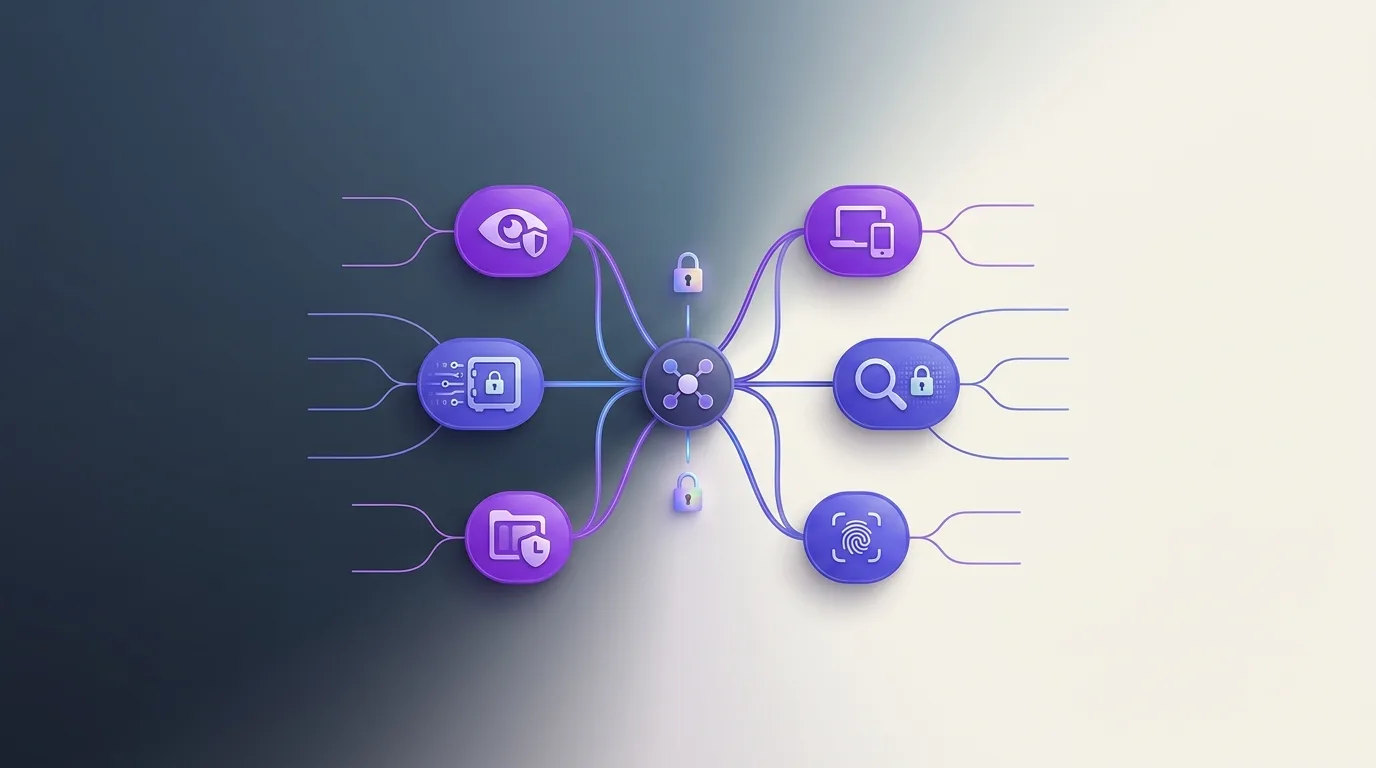
Private mind maps make more sense when the space should not be primarily public or collaborative, but protected. Research, strategy, personal planning, and sensitive mental models often do not need an open workshop feel. They need a calm, private working space.
The real question
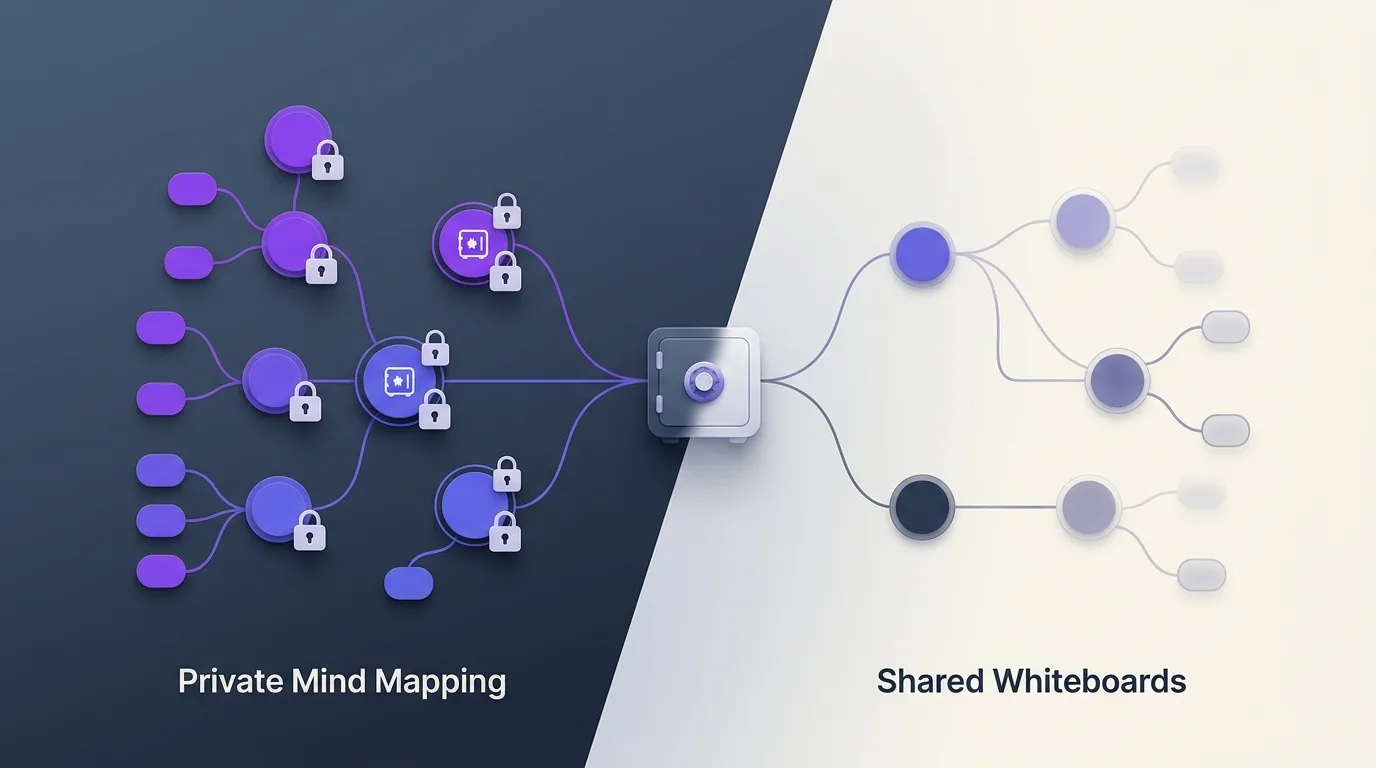
You are not only choosing between two interfaces. You are choosing between two ways of working: broadly visible collaboration or protected structured thinking. For sensitive content, that difference matters more than any minor design detail.

Understanding the fundamental difference
Whiteboards are for communication; mind maps are for cognition. Whiteboards prioritize visual flexibility for groups, while private mind maps prioritize structured thought and clarity for the individual. One is a stage, the other is a laboratory.
What whiteboards are strong at
- Real-time brainstorming with 5+ people.
- Free-form diagramming and 'sticky note' sessions.
- Visual presentations and high-level overviews.
What private mind maps are stronger at
- Deep work and complex problem decomposition.
- Maintaining focus without the visual 'noise' of others.
- Building long-term personal knowledge bases.
How they differ in practice comparison
| Feature | Shared Whiteboard | Private Mind Map |
|---|---|---|
| Privacy | Usually low (Cloud-based) | High (Local/E2EE) |
| Structure | Free-form / Chaos | Hierarchical / Logical |
| Goal | Consensus | Personal Insight |
When to choose each
Choose a Whiteboard when you need to align a team on a concept. Choose a Private Mind Map when you need to think through a difficult problem yourself without outside influence or surveillance.
Understanding the fundamental difference
Whiteboards are for communication; mind maps are for cognition. Whiteboards prioritize visual flexibility for groups, while private mind maps prioritize structured thought and clarity for the individual. One is a stage, the other is a laboratory.
What whiteboards are strong at
- Real-time brainstorming with 5+ people.
- Free-form diagramming and 'sticky note' sessions.
- Visual presentations and high-level overviews.
What private mind maps are stronger at
- Deep work and complex problem decomposition.
- Maintaining focus without the visual 'noise' of others.
- Building long-term personal knowledge bases.
How they differ in practice comparison
| Feature | Shared Whiteboard | Private Mind Map |
|---|---|---|
| Privacy | Usually low (Cloud-based) | High (Local/E2EE) |
| Structure | Free-form / Chaos | Hierarchical / Logical |
| Goal | Consensus | Personal Insight |
When to choose each
Choose a Whiteboard when you need to align a team on a concept. Choose a Private Mind Map when you need to think through a difficult problem yourself without outside influence or surveillance.
Understanding the fundamental difference
Whiteboards are for communication; mind maps are for cognition. Whiteboards prioritize visual flexibility for groups, while private mind maps prioritize structured thought and clarity for the individual. One is a stage, the other is a laboratory.
What whiteboards are strong at
- Real-time brainstorming with 5+ people.
- Free-form diagramming and 'sticky note' sessions.
- Visual presentations and high-level overviews.
What private mind maps are stronger at
- Deep work and complex problem decomposition.
- Maintaining focus without the visual 'noise' of others.
- Building long-term personal knowledge bases.
How they differ in practice comparison
| Feature | Shared Whiteboard | Private Mind Map |
|---|---|---|
| Privacy | Usually low (Cloud-based) | High (Local/E2EE) |
| Structure | Free-form / Chaos | Hierarchical / Logical |
| Goal | Consensus | Personal Insight |
When to choose each
Choose a Whiteboard when you need to align a team on a concept. Choose a Private Mind Map when you need to think through a difficult problem yourself without outside influence or surveillance.