How to Think About Private Note-Taking
Private note-taking is not just a feature question. It is a question of threat model, trust boundaries, and working style. If you only look for the prettiest editor or the longest feature list, you often miss the most important part: who gets access to the content when it actually matters?
Not every privacy question is the same
Some people only want to keep random third parties out. Others want to keep the provider itself away from the plaintext. Others need local storage because certain data should never leave their own device. You need to name those differences clearly before you compare products.
A useful mental model
Ask yourself:
- What kind of content am I really storing there?
- Would it be a problem if the provider could read it?
- Do I need sync across the cloud, or is local enough?
- How important are recovery and team features compared to real access limits?
Why this leads to better decisions
If you answer these questions first, you become less vulnerable to security marketing. Then it becomes easier to see whether you are looking for a convenient standard online app or a private thinking space with intentionally tighter boundaries.
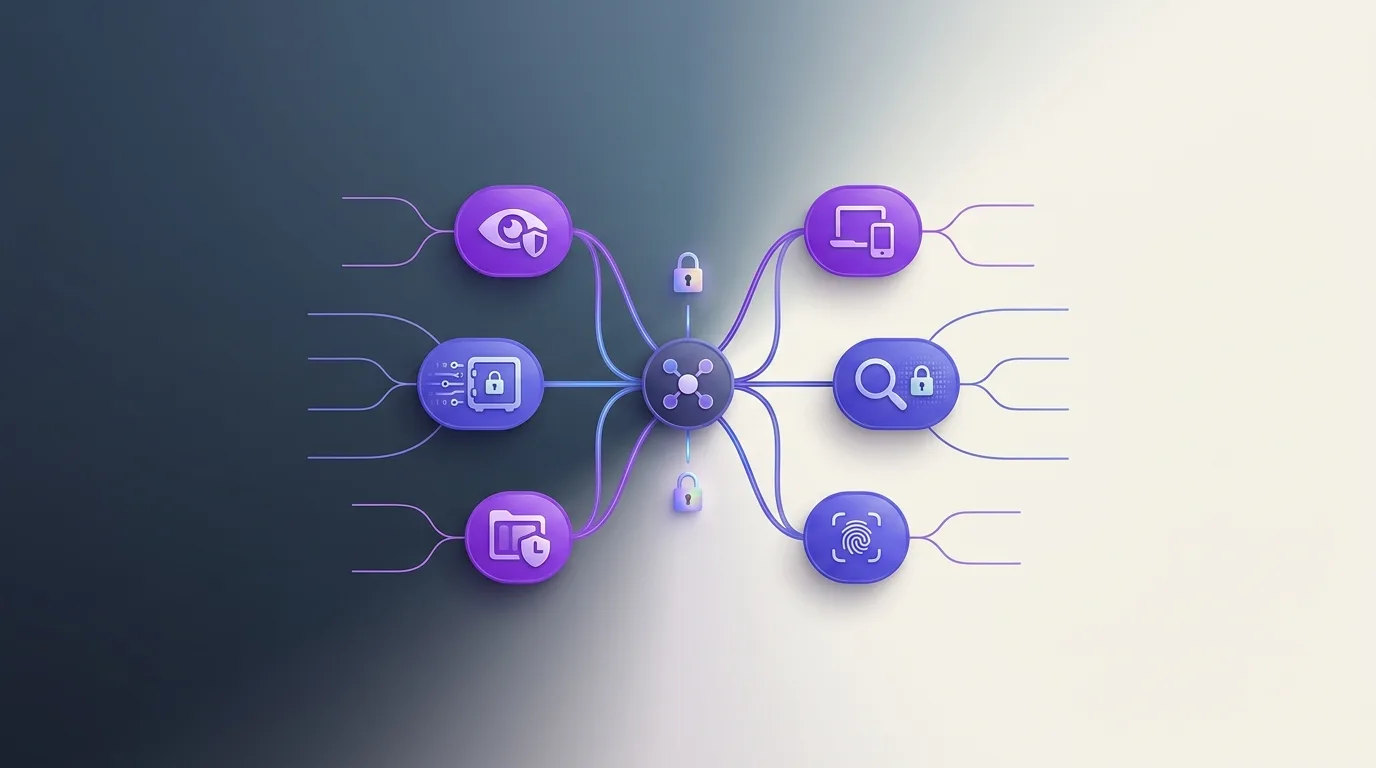
Understanding your threat model
Identifying who you are protecting your notes from is the first step in choosing the right tool. Here are 5 specific threat model examples:
- The Casual Snooper: A family member or roommate who might see notifications or open an unlocked app.
- The Cloud Provider: Companies that scan user data for advertising, training AI, or 'service improvements'.
- The Data Breach: Malicious actors gaining access to a service's central database containing millions of unencrypted user notes.
- Targeted Surveillance: State actors or advanced persistent threats interested in specific intellectual property or sensitive research.
- The Disgruntled Employee: An insider at a software company with administrative access to server-side data.
Mental Model Expansion
To evaluate any tool, ask yourself these expanded questions:
- Where does the key live? If the provider holds the encryption key, they (or anyone who compels them) can read your notes. Ideally, you should be the sole holder of your keys.
- Who can reset my password? In a truly private system, a password reset by the provider usually means data loss, because they shouldn't have the keys to re-encrypt your data.
- Is the code auditable? Can independent researchers verify that the app does what it claims with your data, or is it a 'black box'?
- What metadata is collected? Even if note content is private, knowing when you write, how much you write, and where you are provides a significant profile.
Understanding your threat model
Identifying who you are protecting your notes from is the first step in choosing the right tool. Here are 5 specific threat model examples:
- The Casual Snooper: A family member or roommate who might see notifications or open an unlocked app.
- The Cloud Provider: Companies that scan user data for advertising, training AI, or 'service improvements'.
- The Data Breach: Malicious actors gaining access to a service's central database containing millions of unencrypted user notes.
- Targeted Surveillance: State actors or advanced persistent threats interested in specific intellectual property or sensitive research.
- The Disgruntled Employee: An insider at a software company with administrative access to server-side data.
Mental Model Expansion
To evaluate any tool, ask yourself these expanded questions:
- Where does the key live? If the provider holds the encryption key, they (or anyone who compels them) can read your notes. Ideally, you should be the sole holder of your keys.
- Who can reset my password? In a truly private system, a password reset by the provider usually means data loss, because they shouldn't have the keys to re-encrypt your data.
- Is the code auditable? Can independent researchers verify that the app does what it claims with your data, or is it a 'black box'?
- What metadata is collected? Even if note content is private, knowing when you write, how much you write, and where you are provides a significant profile.
Understanding your threat model
Identifying who you are protecting your notes from is the first step in choosing the right tool. Here are 5 specific threat model examples:
- The Casual Snooper: A family member or roommate who might see notifications or open an unlocked app.
- The Cloud Provider: Companies that scan user data for advertising, training AI, or 'service improvements'.
- The Data Breach: Malicious actors gaining access to a service's central database containing millions of unencrypted user notes.
- Targeted Surveillance: State actors or advanced persistent threats interested in specific intellectual property or sensitive research.
- The Disgruntled Employee: An insider at a software company with administrative access to server-side data.
Mental Model Expansion
To evaluate any tool, ask yourself these expanded questions:
- Where does the key live? If the provider holds the encryption key, they (or anyone who compels them) can read your notes. Ideally, you should be the sole holder of your keys.
- Who can reset my password? In a truly private system, a password reset by the provider usually means data loss, because they shouldn't have the keys to re-encrypt your data.
- Is the code auditable? Can independent researchers verify that the app does what it claims with your data, or is it a 'black box'?
- What metadata is collected? Even if note content is private, knowing when you write, how much you write, and where you are provides a significant profile.