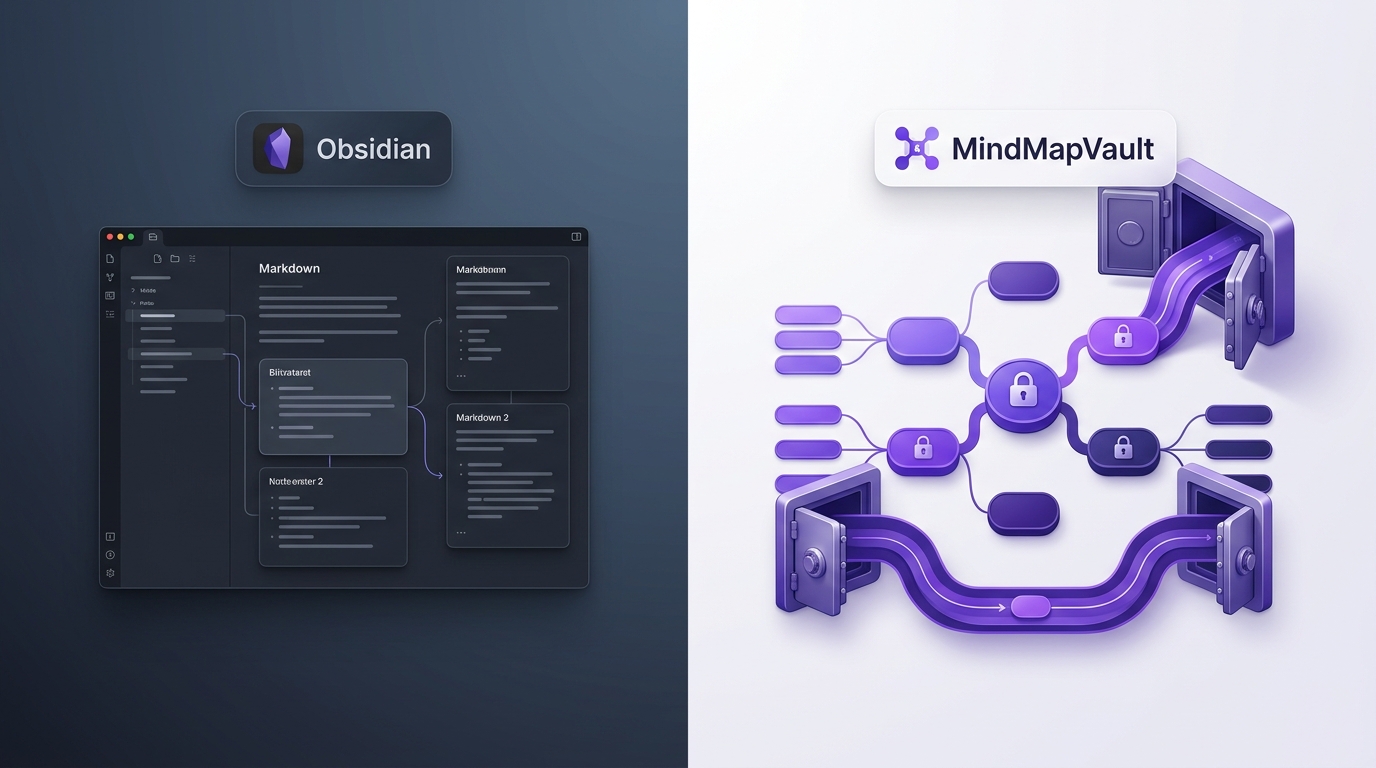
MindMapVault MMV

Why it feels different

Private workspace for unfinished thinking.

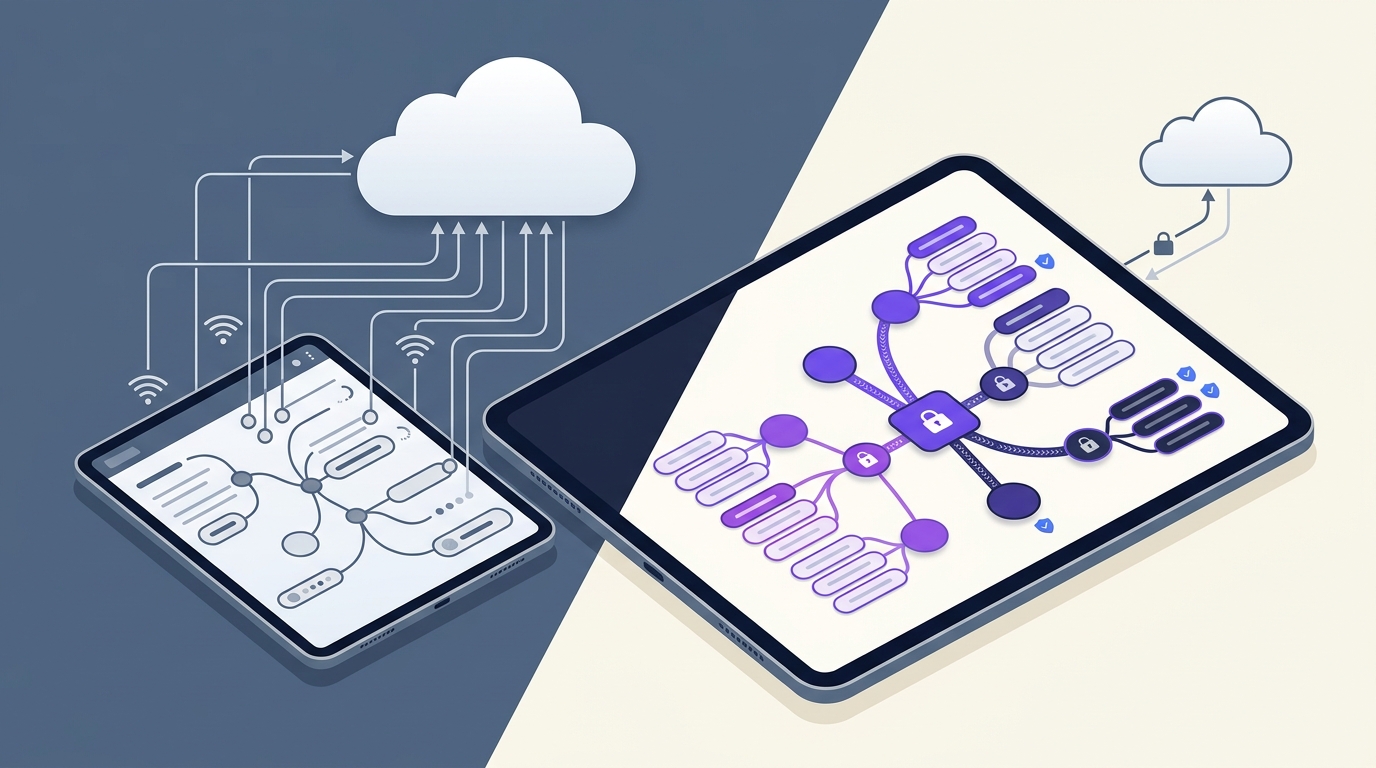
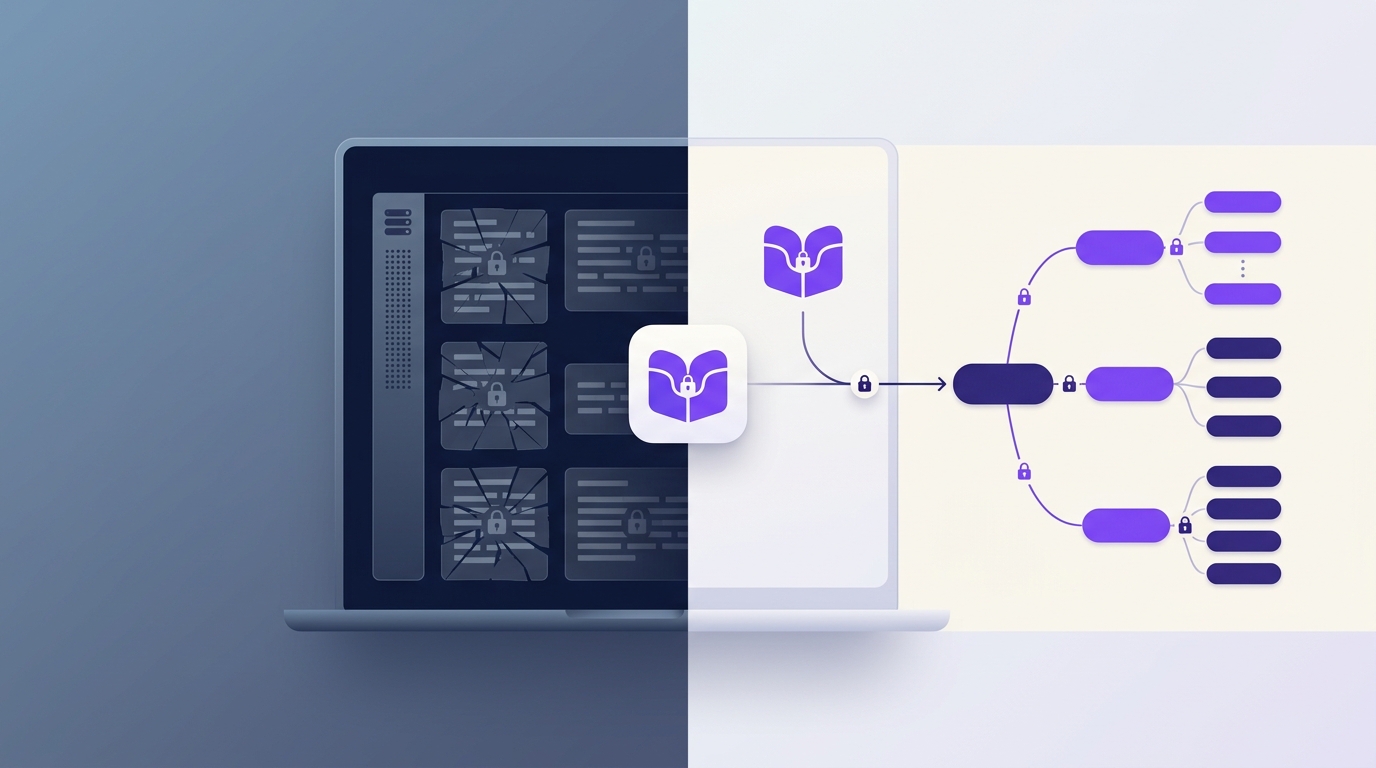
Built for ideas that are still messy, sensitive, or early. Your maps, notes, and structure stay yours. Fully encrypted. Never readable by the server.

Your ideas stay yours

  • Ciphertext only.
  • No readable maps.
  • No server-side copies.
  • No analytics or telemetry.

Only you can unlock it

  • Trust boundary stays on your device.
  • Your key never leaves the client.
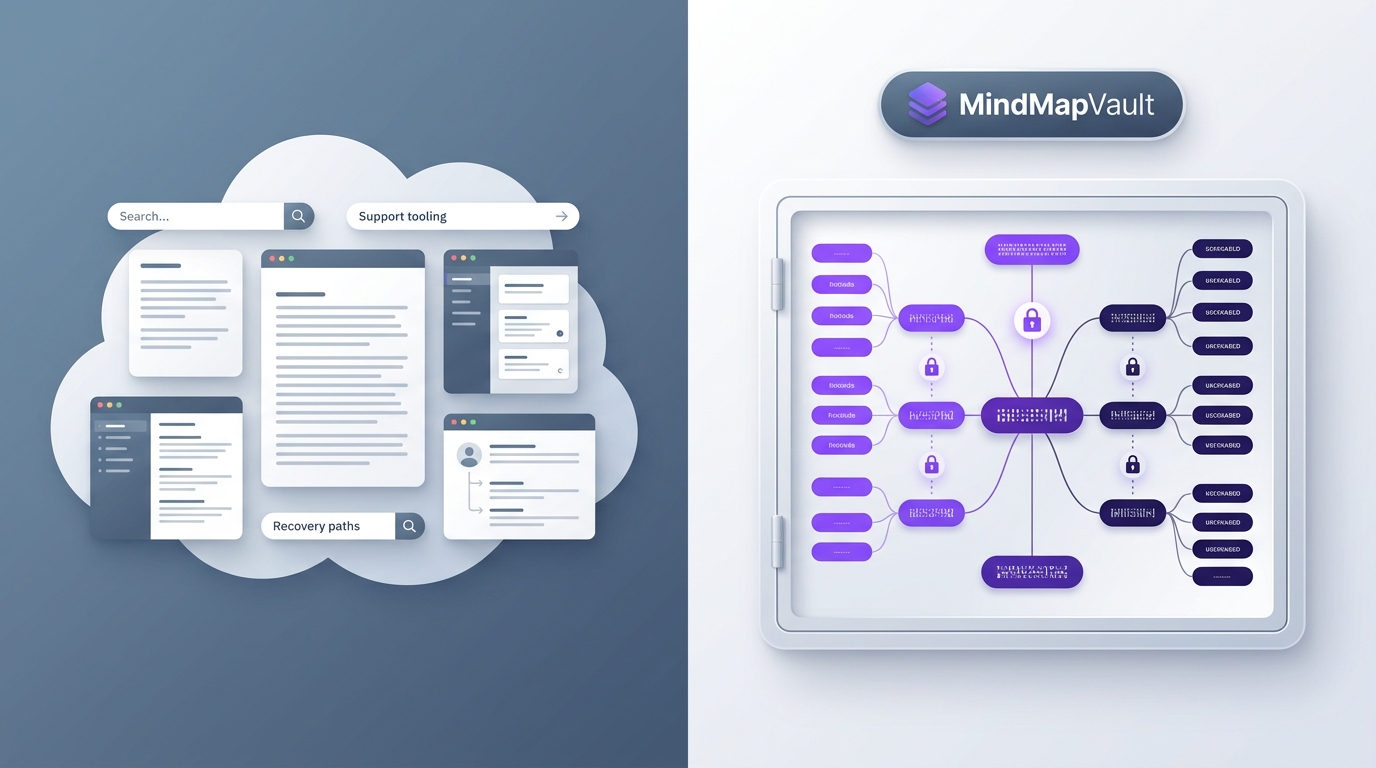
  • Server can host, but cannot read your data.
  • No shared secrets or server-side key material.

Mind maps reveal more than text

  • Maps expose priorities, uncertainty, relationships, and structure.
  • That structure is often more sensitive than the words.
  • Your structure, not just your words, stays private.
  • MindMapVault protects both.

Honest limits, not fake recovery

  • Lose your key → lose access.
  • No admin override.
  • No recovery button.
  • No hidden decrypt path.

Modes and plans

Choose cloud convenience or keep everything local.

Three public product lanes plus an on-premise path, presented simply so the trust model stays easy to evaluate.

Cloud Free

$0 / year

Private cloud vaults with up to 25 MB total encrypted storage.

  • Free tier planned for at least 3 years
  • Cross-device web access
  • Same encryption model as paid

Desktop Local + Self-Hosted

Free

Choose the fully local desktop path or run MindMapVault on your own infrastructure with PostgreSQL and S3-compatible storage.

  • Windows and Linux desktop builds
  • Self-hosted Docker deployment available
  • Same zero-knowledge trust model

On‑Premise Installation

Contact us

Deploy MindMapVault inside your environment while preserving the zero‑knowledge model.

Email us

What is included

  • Private deployment (Docker / Kubernetes)
  • SSO integration (SAML / OIDC)
  • REST API and webhooks for automation
  • Deployment guidance and rollout support

Why it matters

  • Full data control for regulated environments
  • Seamless integration with corporate identity
  • Reduced operational risk and time‑to‑production
  • Priority support and SLAs for production incidents

Comparison summary

How MindMapVault compares to other mind mapping and note apps — especially on privacy.

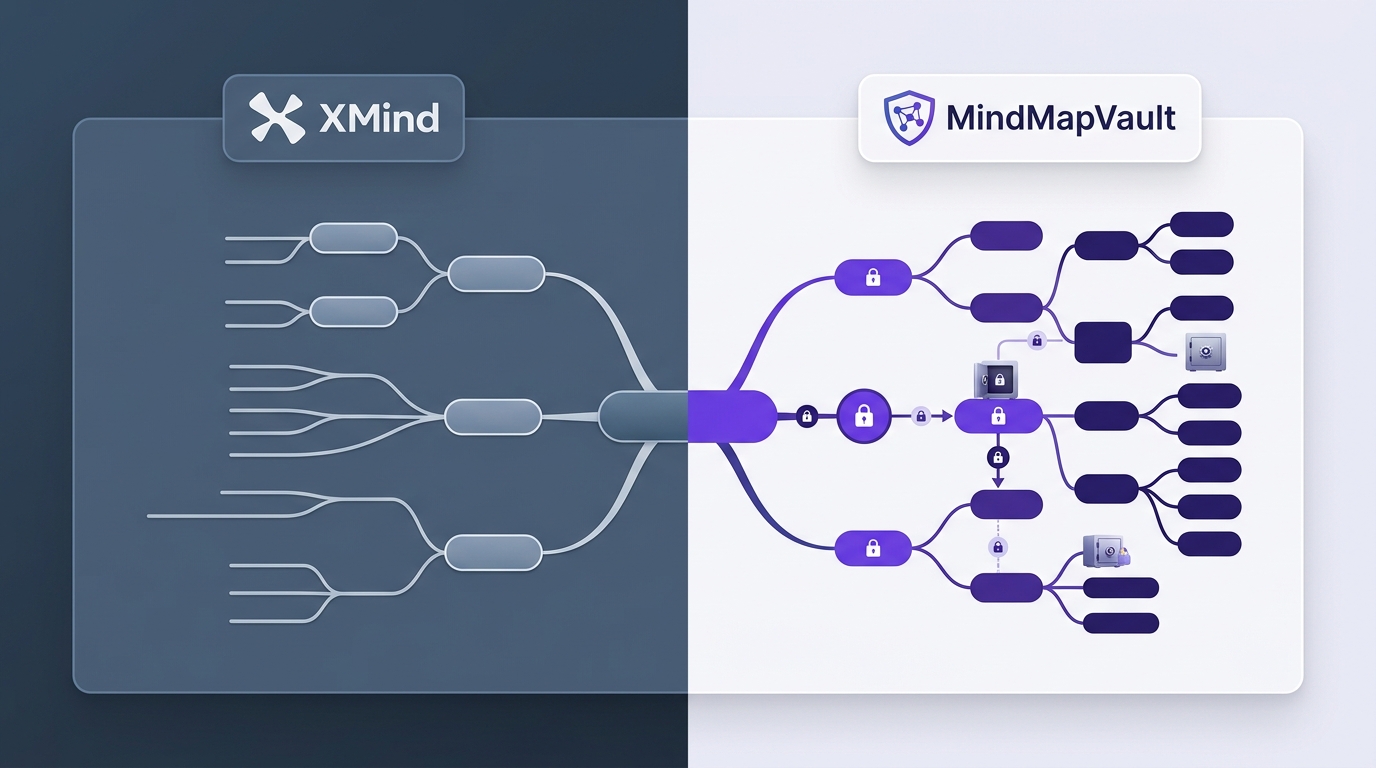
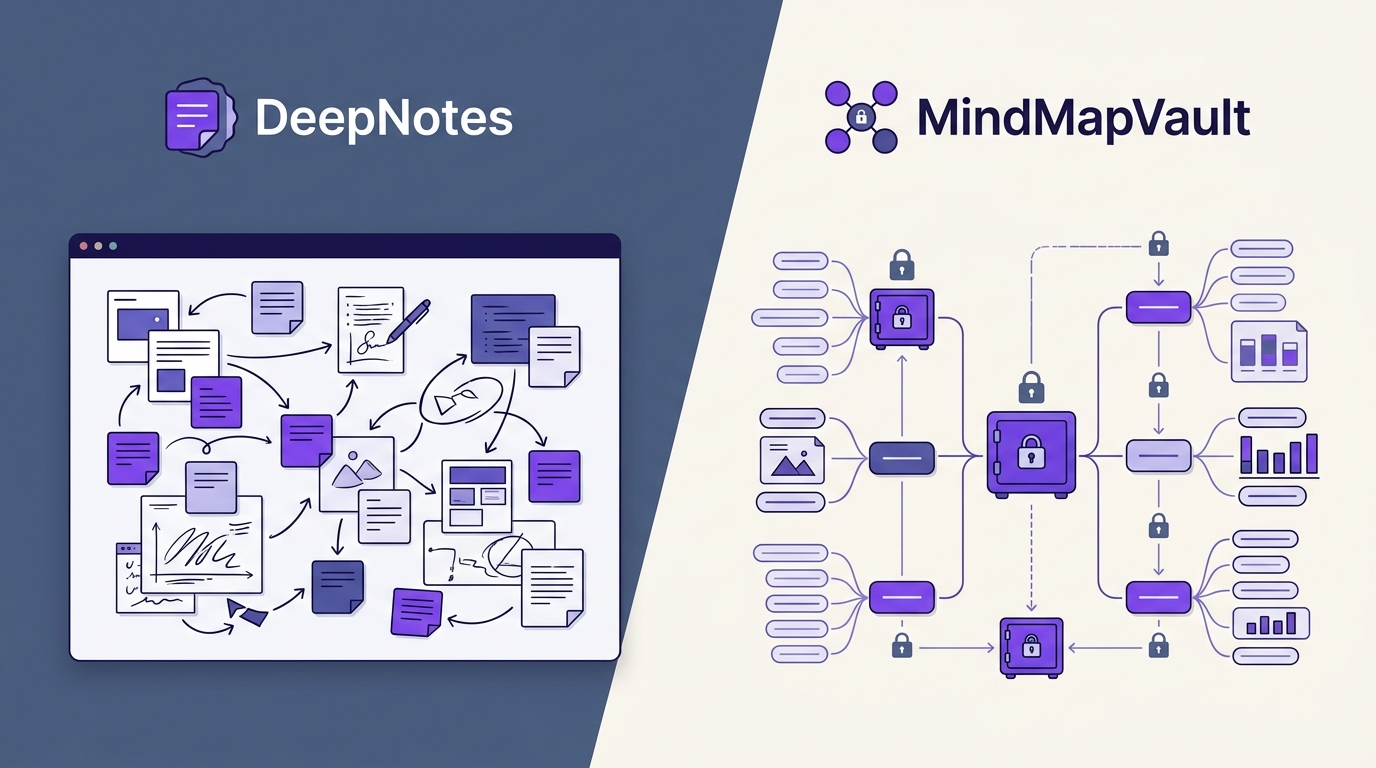
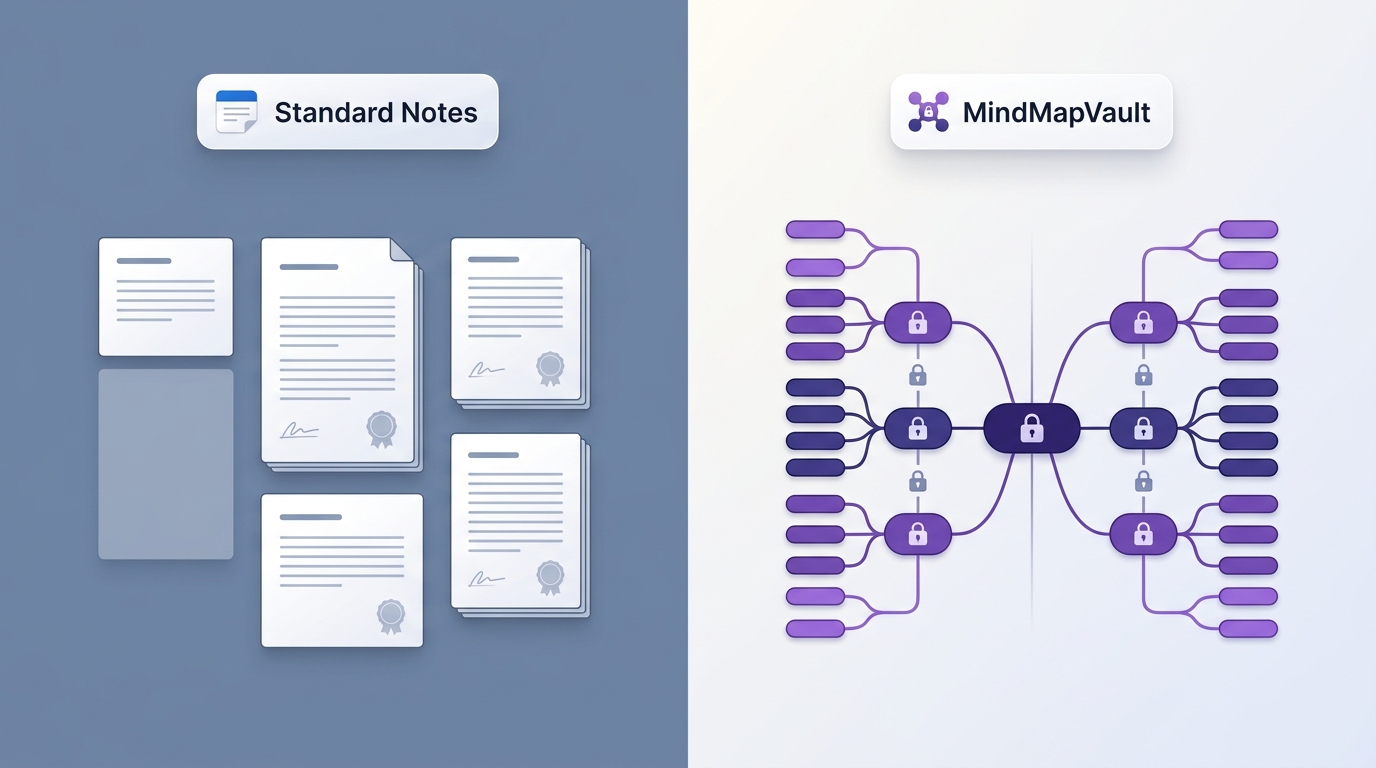
Category MindMapVault MindMeister XMind DeepNotes Standard Notes Obsidian
Pricing baseline $10/year ~$78/year $59/year $60/year $90/year $48/year
Mind maps native Yes Yes Yes Partial No Partial
Client-side encryption model Always for hosted vaults No Not core Yes Yes Optional
Offline/local-first path Yes Mostly hosted-first Yes Yes Yes Yes
No admin-readable backdoor Explicitly yes No No Partial Yes No single strict promise

Key takeaways

  • MindMapVault is the only option with always-on client-side encryption for hosted vaults.
  • It is the only tool with an explicit no-backdoor guarantee.
  • It offers both cloud and fully local/offline paths.
  • It is also the most affordable option in the list.

Q&A

Common questions about encryption, data handling, and product limits — answered directly and published as plain HTML with structured data for search and AI retrieval.

What if I forget my password?

There is no password recovery for existing encrypted vault contents. If you lose the credentials that unlock your vault keys, the content is lost by design.

What happens if I discontinue a subscription?

The goal is downgrade, not surprise deletion. Paid storage falls back toward free-tier limits, and you can export or reduce data if over quota.

Do you keep version history?

Yes. The storage model is built around versioned encrypted blobs so a vault can keep historical saves instead of only the latest state.

What data is stored and what gets logged?

Stored data includes account details, encrypted vault metadata, encrypted blobs, and billing records when relevant. Logs are operational and should not contain plaintext notes or keys.

When and where is a vault decrypted?

Decryption happens in the browser or desktop app after local unlock. The backend stores ciphertext and serves encrypted payloads.

Which clients exist today?

Today the focus is the web UI and desktop apps. Mobile clients are not the priority yet.