How To Avoid a Data Breach for Notes
Short answer
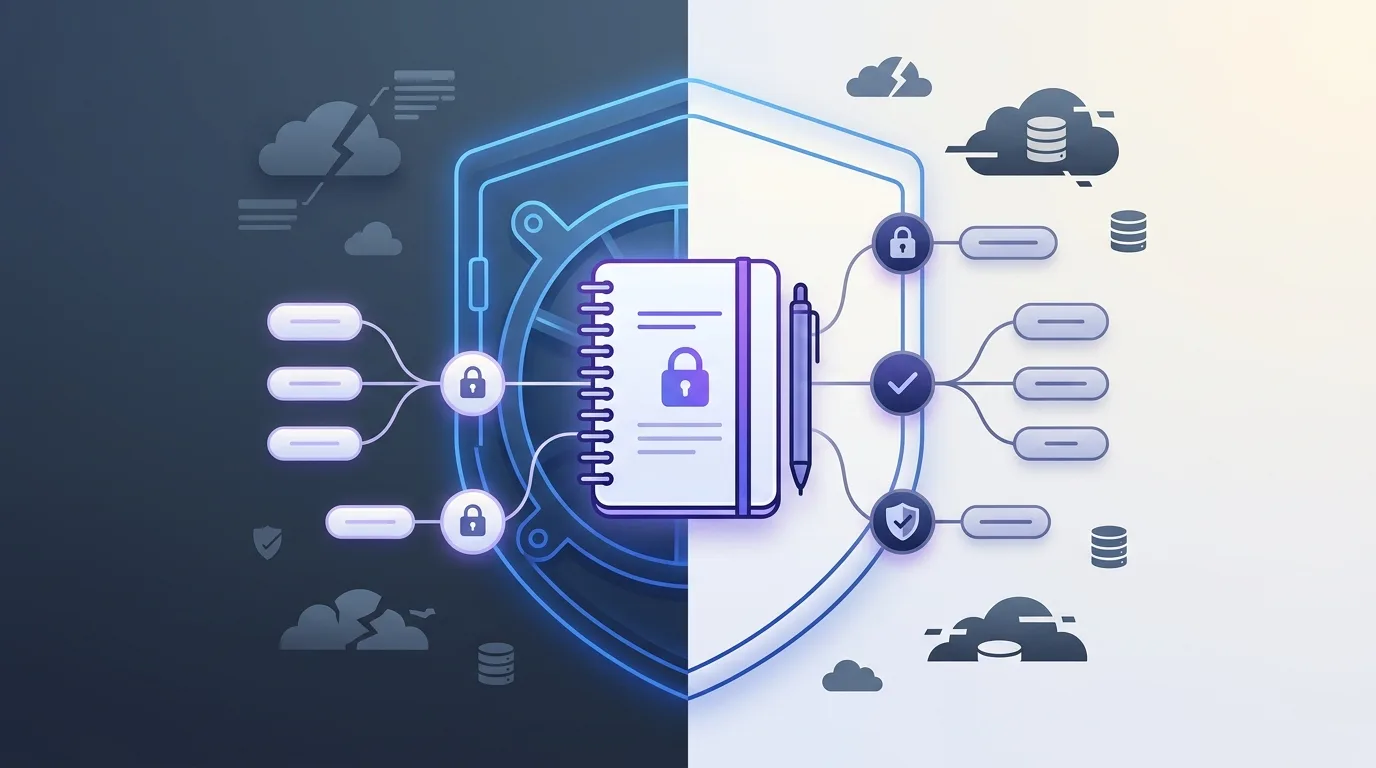
No tool removes all risk, but you can lower risk a lot by reducing how much readable data exists outside your own device.
Practical steps
1. Prefer systems that do not need readable server-side notes
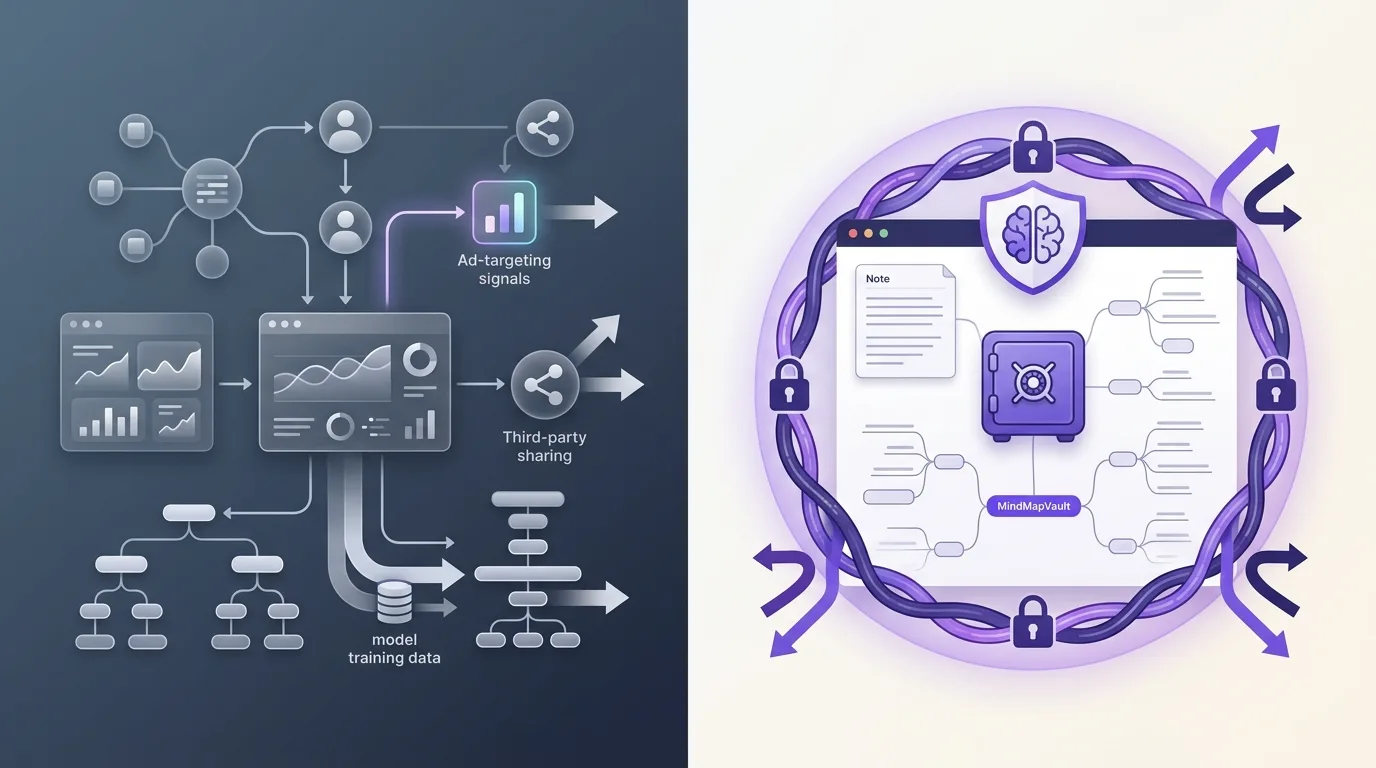
If the provider never needs plain text note content, a backend breach becomes less damaging.
2. Use strong passwords and device security
Encryption helps, but device compromise and weak credentials still matter.
3. Be careful with exports and screenshots
Many leaks happen outside the main app, through copies, shared exports, screenshots, or synced plain-text backups.
4. Minimize unnecessary integrations
Every extra plugin, API connection, or automation adds another place where data may become readable.
5. Check what metadata is still exposed
Even if note bodies are encrypted, titles, account details, file sizes, or timestamps may still reveal useful information.
The big idea
The best breach defense is not only strong security around readable data. It is needing less readable shared data in the first place.
Reduce the blast radius
The easiest way to lower breach impact is to store less plaintext outside your device.
That usually means:
- prefer local encryption before sync
- avoid server-side note processing when you can
- keep exports, caches, and backups encrypted too
- remove integrations you do not actively need
A simple 5-part checklist
- Keep note content encrypted before it leaves the device.
- Protect the device itself with a strong password and system lock.
- Use a backup method you can actually restore.
- Keep software updated so known vulnerabilities are patched.
- Review what metadata still remains visible even when content is protected.
A practical takeaway
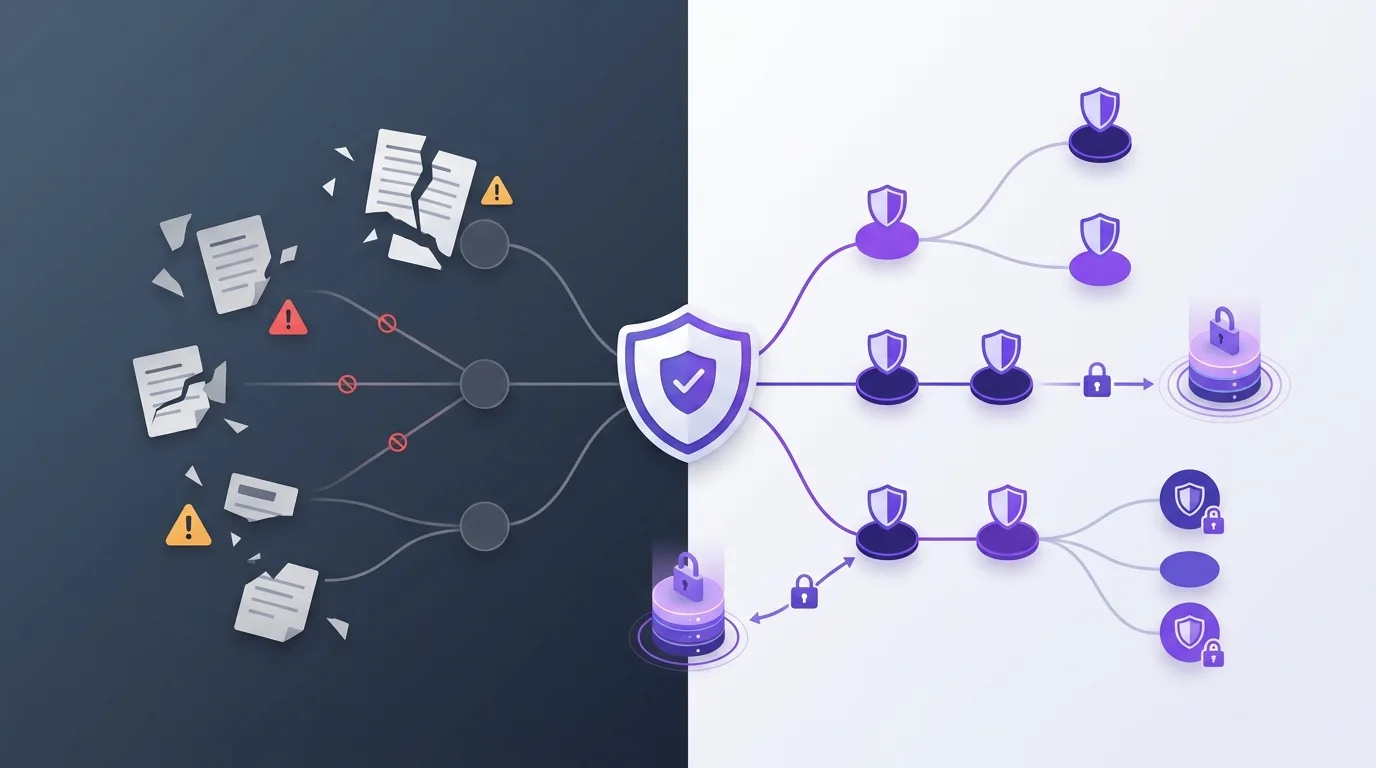
A breach becomes much less severe when the attacker only gets ciphertext, not a central vault of readable notes.