
MindMapVault MMV

Contrast between transparent privacy practices and hidden surveillance concerns

Privacy-First Should Not Mean Hidden Surveillance

A product cannot credibly market itself as privacy-first while still keeping more visibility in the background than users would reasonably expect. Hidden analytics paths, quiet admin access, or marketing-friendly exceptions undermine exactly the trust that those privacy claims are supposed to create.

Where the problem starts

The issue is often not an outright lie, but soft wording. Products talk about protection and respect without saying clearly who can read content, which metadata stays visible, or where internal exceptions exist. That creates a picture of security that is not fully backed by the technology.

What a credible privacy product should do instead

It should name the limits openly: no secret recovery backdoor, no quiet plaintext view for support, no hidden repurposing of sensitive content. That may make some convenience features impossible, but it makes the promise more trustworthy.

Why this matters

Users make trust decisions based on exactly these terms. If privacy becomes only a label, confusion appears where clarity should exist.
The promise vs. the practice

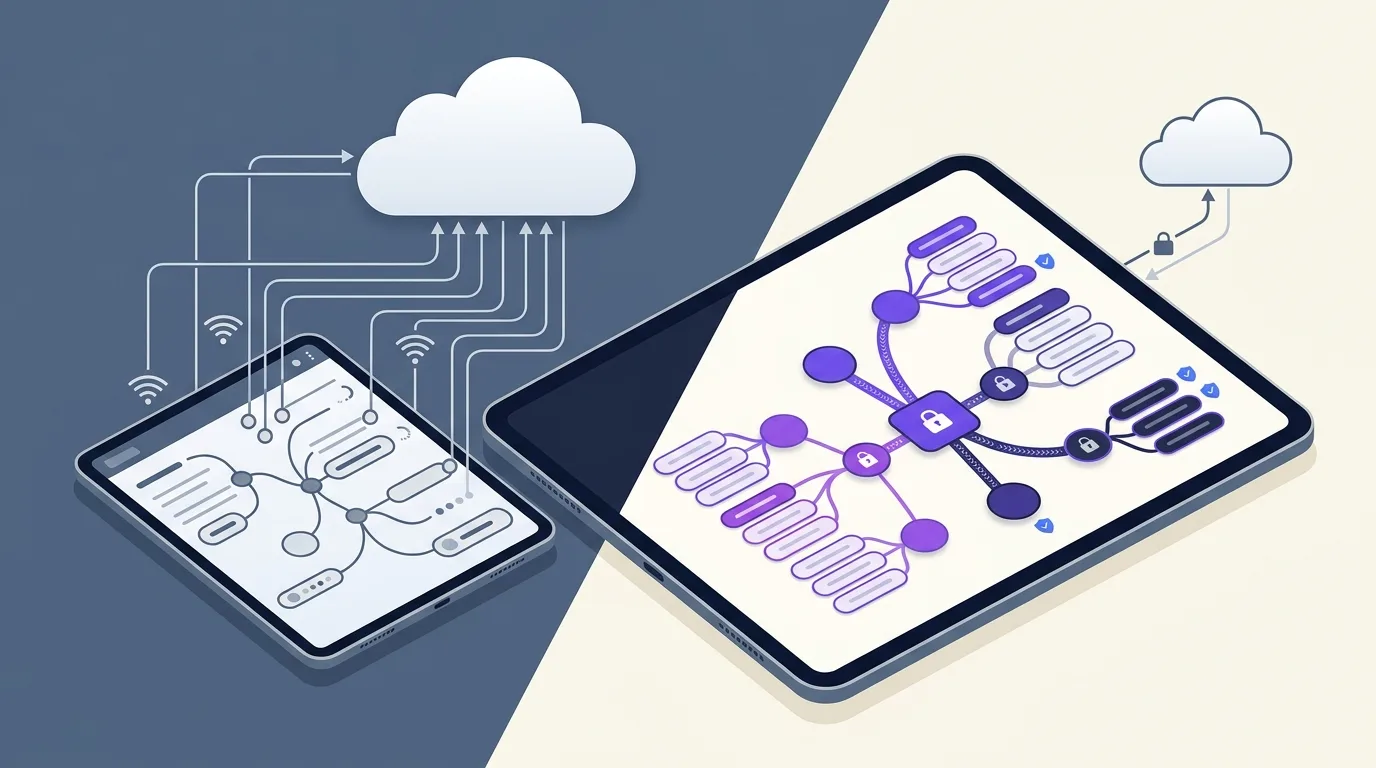
In the tech world, 'Privacy-First' is often a marketing label rather than a technical reality. A product can be 'private' from third parties while the company itself monitors everything you do through telemetery and 'usage analytics'.

How companies rationalize hidden surveillance

Usage Analytics

'We only track which buttons you click.' But the pattern of those clicks reveals your workflow and habits.

Error Reporting

'We need logs to fix bugs.' Often these logs contain snippets of data or file paths from your local machine.

AI Improvements

'Your data helps us train better models.' This is the ultimate privacy violation: turning your thoughts into their product.

Security Logs

IP addresses and login timestamps are frequently kept 'for your protection' but form a permanent record of your activity.

What a credible privacy product actually does

  • Avoids telemetry entirely or makes it strictly opt-in.
  • Uses local-first architecture.
  • Focuses on a sustainable business model (subscriptions) rather than data monetization.

Commercial data use

Even when a product avoids obvious telemetry, it may still use customer data commercially through advertising, third-party sharing, analytics partnerships, or training datasets. "Anonymized" data can still be valuable to the company and risky to users if the aggregation is weak or re-identification is possible.

Questions to ask any privacy-first product

  • What telemetry is sent by default?
  • Can I use the app without an account?
  • Does the app connect to the internet when I'm just typing notes?

The promise vs. the practice

In the tech world, 'Privacy-First' is often a marketing label rather than a technical reality. A product can be 'private' from third parties while the company itself monitors everything you do through telemetery and 'usage analytics'.

How companies rationalize hidden surveillance

Usage Analytics

'We only track which buttons you click.' But the pattern of those clicks reveals your workflow and habits.

Error Reporting

'We need logs to fix bugs.' Often these logs contain snippets of data or file paths from your local machine.

AI Improvements

'Your data helps us train better models.' This is the ultimate privacy violation: turning your thoughts into their product.

Security Logs

IP addresses and login timestamps are frequently kept 'for your protection' but form a permanent record of your activity.

What a credible privacy product actually does

  • Avoids telemetry entirely or makes it strictly opt-in.
  • Uses local-first architecture.
  • Focuses on a sustainable business model (subscriptions) rather than data monetization.

Questions to ask any privacy-first product

  • What telemetry is sent by default?
  • Can I use the app without an account?
  • Does the app connect to the internet when I'm just typing notes?

The promise vs. the practice

In the tech world, 'Privacy-First' is often a marketing label rather than a technical reality. A product can be 'private' from third parties while the company itself monitors everything you do through telemetery and 'usage analytics'.

How companies rationalize hidden surveillance

Usage Analytics

'We only track which buttons you click.' But the pattern of those clicks reveals your workflow and habits.

Error Reporting

'We need logs to fix bugs.' Often these logs contain snippets of data or file paths from your local machine.

AI Improvements

'Your data helps us train better models.' This is the ultimate privacy violation: turning your thoughts into their product.

Security Logs

IP addresses and login timestamps are frequently kept 'for your protection' but form a permanent record of your activity.

What a credible privacy product actually does

  • Avoids telemetry entirely or makes it strictly opt-in.
  • Uses local-first architecture.
  • Focuses on a sustainable business model (subscriptions) rather than data monetization.

Questions to ask any privacy-first product

  • What telemetry is sent by default?
  • Can I use the app without an account?
  • Does the app connect to the internet when I'm just typing notes?