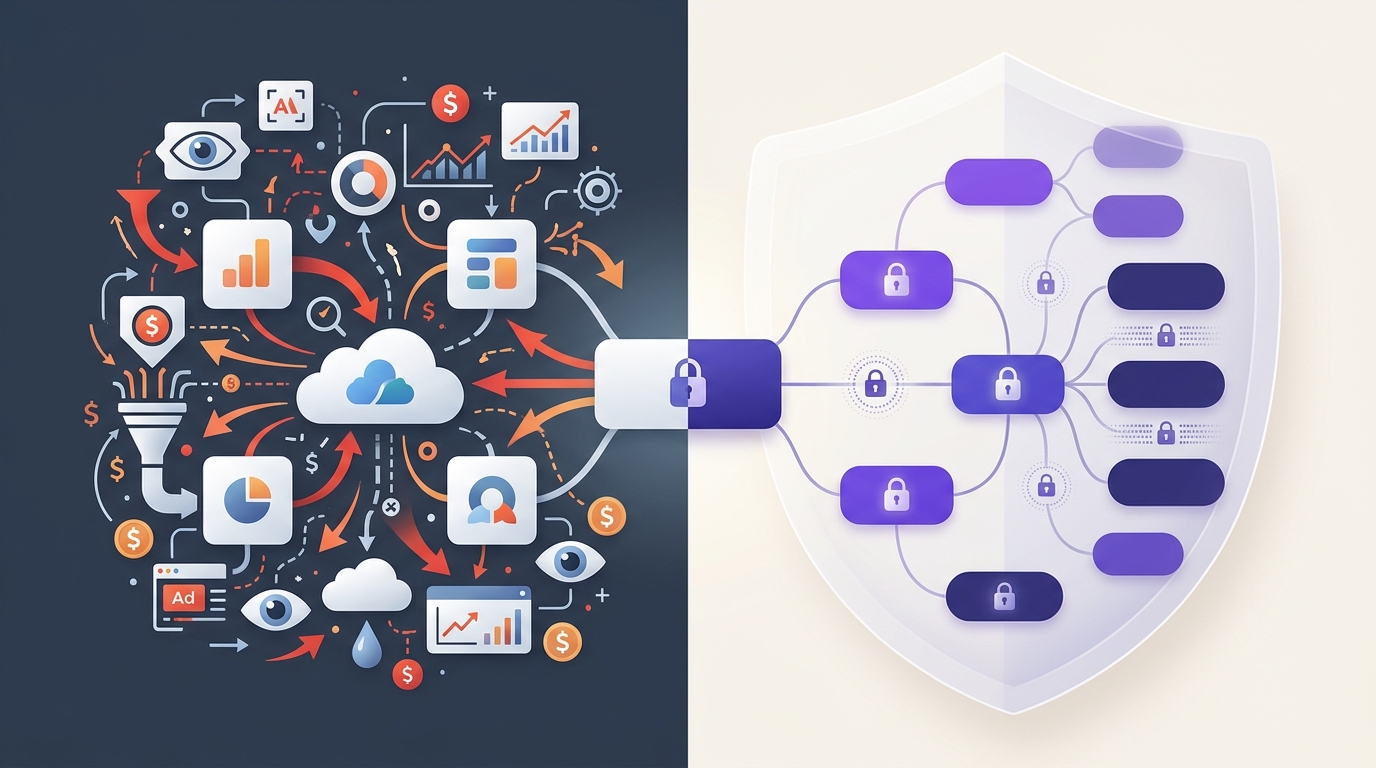
MindMeister, XMind, Obsidian Canvas, WiseMapping: Which One Actually Respects Your Privacy?**
I didn’t write this because the world needed another comparison post.
I wrote it because I got fed up with privacy theater.
Fed up with “secure” tools that still read user content.
Fed up with products that shout privacy in marketing and whisper data monetization in practice.
Fed up with cloud defaults that quietly turn your thinking into analytics input.
After enough research, one pattern kept repeating:
most mind‑mapping products optimize for growth metrics first, and privacy second.
That is exactly why I built MindMapVault.
Don’t take my word for it.
If someone says this is unfair, tell them to open the repos, inspect what is actually public, check how modern the stack is, and compare the implemented trust boundaries with the marketed ones.
A note from Part 0: what we lost after the FreeMind era
In my first dev.to post (Part 0), I wrote about the old FreeMind feeling:
fast keyboard flow, low friction, and the tool getting out of your way while the thought is still alive.
That nostalgia isn’t about “old software was perfect.”
It’s about how modern tools traded focus for bloat, and clarity for growth mechanics.
I still want that old speed — but with modern privacy boundaries and cross‑device availability.
That’s the bar I use in this comparison.
MindMeister: polished, collaborative, and weak on privacy boundaries
MindMeister is polished and easy to onboard.
But for sensitive thinking workflows, the trust model is the problem:
- cloud‑first by default
- no strict zero‑knowledge architecture
- no client‑held key model preventing provider readability
- analytics‑centric product behavior
If your maps contain strategy, private planning, or research structure, this is a risky fit.
XMind: strong desktop UX, but cloud trust remains the issue
XMind desktop is excellent.
The moment sync enters the picture, privacy guarantees weaken:
- no strict provider‑blind zero‑knowledge model
- hosted readability concerns remain
- core internals are not fully open for independent verification
If your requirement is “the provider cannot read my map,” this is not enough.
Obsidian Canvas: flexible tool, different problem space
Obsidian is powerful, and Canvas is genuinely useful.
But it is still a note ecosystem first — not a privacy‑first mind‑mapping system.
- sync trust model is not equivalent to strict zero‑knowledge
- plugin ecosystems expand the leakage surface
- privacy outcomes depend heavily on user setup discipline
Great for many workflows.
Not a direct replacement for a dedicated encrypted mind‑mapping product.
WiseMapping: open source does not automatically mean private
WiseMapping is often presented as the “free open” option.
The hosted reality raises serious concerns:
- third‑party script and ad ecosystem exposure
- no encryption‑first architecture
- older stack profile with unclear modern security posture
Open source is good.
But open source + ads + outdated stack is not a safe boundary for sensitive ideas.
The core issue: monetization pressure versus private thought
Most products are not malicious.
They are simply optimized for monetization models:
- analytics pipelines
- retention tuning
- behavior instrumentation
- data abstractions users rarely audit
Call it “insights,” “optimization,” or “engagement.”
The effect is the same:
your thinking process becomes measurable product data.
Why MindMapVault exists
MindMapVault was built around one non‑negotiable:
private visual thinking must stay private.
Design goals:
- client‑side encryption for sensitive content
- local‑first editing paths
- no hidden telemetry in core workflows
- no ads inside the thinking workspace
- explicit trust boundaries in architecture
Privacy is not a feature badge.
It is a systems decision.
Important product notes
If you’re evaluating long‑term adoption, these points matter:
- Open‑source server edition: MindMapVault Server is open source for users who want self‑hosted deployment and infrastructure ownership.
- PWA support: the server/web path supports PWA‑style usage so the app can behave like an installable web app with offline‑friendly behavior.
- Modern Rust stack: backend paths are built with a current Rust stack, prioritizing performance, predictable concurrency, and maintainable security boundaries.
This combination is intentional:
privacy model first, modern engineering second, deployment flexibility third.
Quick comparison snapshot
Same emphasis as on the main landing comparison: MindMapVault is the first highlighted reference column.
| Category |
🔒 MindMapVault |
MindMeister |
XMind |
Obsidian Canvas |
WiseMapping (hosted) |
| Privacy boundary |
Explicitly yes |
No |
No strict guarantee |
Depends on setup |
No |
| Client-side encryption model |
Always for hosted vaults |
No |
Partial/unclear in hosted paths |
Depends on setup |
No |
| Offline/local-first path |
Yes |
Limited |
Yes (desktop) |
Yes |
Limited |
| No admin-readable backdoor |
Explicitly yes |
No |
No strict guarantee |
Depends on setup |
No |
| Ads and third-party pressure |
No |
No |
No |
No |
Yes (third-party ecosystem) |
| Open source posture |
Yes (FOSS desktop + open server) |
No |
Partial |
Partial core |
Yes |
Key takeaways
- MindMapVault is the only option in this table with an explicit no‑backdoor privacy model.
- It combines modern cloud sync capability with local/offline-first workflows.
- Server edition is open source, with PWA support and an actively maintained Rust backend stack.
Final thought
If a tool is where you think, plan, and make decisions, privacy cannot be an afterthought.
The practical question is simple:
Can the provider read your map content — directly or indirectly?
If the answer is yes, it is not a private mind‑mapping tool.
And if someone says “trust us,” ask for proof in public.
Show me the repo.
Show me the architecture.
Show me the boundary.